The information on this website is general in nature and does not take into account your objectives, financial situation, or needs. Consider seeking personal advice from a licensed adviser before acting on any information.
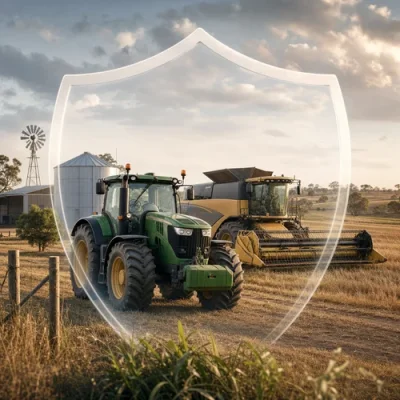
Farm machinery is central to many Australian farming operations, from tractors and harvesters to other essential equipment. Because this machinery can be costly to repair or replace, farm equipment insurance can help farmers manage financial risks such as theft, fire, accidental damage and other insured events.
What is farm equipment insurance?
Farm equipment insurance is a specialised type of cover designed to protect machinery used in farming. Depending on the policy, it may cover equipment such as tractors, harvesters and other machinery that is essential to day-to-day farm work.
The purpose of the cover is to help manage the financial impact of insured events affecting farm machinery. These may include theft, fire, accidental damage and, where included in the policy, certain natural disaster-related losses. The exact protection depends on the policy wording, limits, exclusions and conditions.
For Australian farmers, equipment insurance is usually considered alongside broader farm insurance arrangements. If you are reviewing cover across the whole business, a tool such as a farm insurance calculator may help you think through the types and levels of cover that could be relevant before discussing options with an insurer or broker.
Why farm equipment insurance matters
Farm equipment can represent a significant investment. When machinery is damaged, destroyed or stolen, the cost of repair or replacement can create financial pressure and may interrupt farm operations, particularly during busy periods such as planting or harvest.
Insurance does not remove the risk of an incident occurring, and it does not guarantee that every loss will be covered. However, where the event falls within the policy terms, cover can help reduce the out-of-pocket cost of getting equipment repaired or replaced.
Common situations where cover may be important
- Fire damage: A tractor or other machine damaged by fire may be expensive to repair or replace. Whether a claim is payable will depend on the policy and circumstances.
- Theft: Stolen equipment can be difficult and costly to replace, especially if it is essential to daily operations.
- Accidental damage: Machinery can be damaged during operation, transport or storage. Policies vary in how accidental damage is defined and limited.
- Natural events: Some policies may respond to certain weather or disaster-related events, but exclusions and sub-limits should be checked carefully.
- Liability incidents: If machinery causes damage to someone else's property or contributes to an injury, liability cover may be relevant if included in the insurance arrangement.
Types of farm equipment insurance cover
Farm equipment insurance can be structured in different ways. Some policies provide broad protection for a range of risks, while others focus on specific events such as theft or accidental damage. The following categories are useful starting points when reading policy documents.
| Cover type |
What it may address |
What to check |
| Comprehensive equipment cover |
May provide broader protection for machinery against multiple insured events such as fire, theft, accidental damage and some natural events. |
Check the insured events, exclusions, excesses, limits, valuation method and whether all key machines are listed correctly. |
| Damage and theft cover |
Focuses on losses from accidental damage and theft of covered equipment. |
Check how accidental damage is defined, security requirements, proof of ownership requirements and whether equipment is covered on or off the farm. |
| Liability cover |
May help with claims involving injury or property damage connected with the use of farm equipment. |
Check whether liability is part of the same policy or separate cover, and review the policy limits and exclusions. |
For a practical list of items to review before arranging or renewing cover, you may also find a farm equipment insurance checklist useful.
Key policy details to compare
When comparing farm equipment insurance, the cheapest policy is not automatically the most appropriate. A lower premium may come with lower limits, narrower cover, higher excesses or exclusions that matter to your operation.
Coverage limits
Coverage limits are the maximum amounts an insurer will pay for particular claims or items. If the limit is lower than the value of the equipment or the likely repair or replacement cost, the farm may be left with a shortfall.
Exclusions
Exclusions are circumstances where the policy will not respond. These can vary widely between insurers and products. It is important to read the policy documents and understand what is not covered before relying on the insurance.
Cost and value
Premiums are an important part of the decision, but they should be assessed together with the breadth of cover, excesses, limits and claims process. A policy that appears inexpensive may not provide the protection expected if a major machine is damaged or stolen.
Insurer reputation and service
Customer service and claims handling can affect the experience of making a claim. Farmers may wish to review insurer information, seek recommendations from other farmers and consider how clearly the insurer explains policy conditions and claim requirements.
For more detail on the factors that can influence premiums and cover levels, see this guide to what affects farm insurance costs in Australia.
How to compare farm equipment insurance options
Comparing policies usually involves more than looking at a single premium. It can help to prepare a list of the equipment to be insured, including details such as make, model, age, usage and estimated value, then compare how each policy would treat those assets.
Use online resources carefully
Online resources can help you understand available options and policy features. Some insurer websites provide product summaries and policy documents that explain cover, exclusions, costs and optional benefits.
Read reviews and farmer feedback
Reviews and testimonials from other farmers may provide insight into service quality, claim handling and communication. These sources should be treated as one input only, as each farm's circumstances and claim history are different.
Consider professional assistance
Insurance brokers or specialists may help explain policy terms, compare cover and identify questions to ask insurers. They can also help farmers understand exclusions, limits and conditions before choosing a policy. If you want to understand how intermediaries may assist, the site's broker information provides further context.
If you are ready to request pricing or compare available options, you can start with a neutral farm insurance quote enquiry and use the policy information provided to assess cover rather than relying on price alone.
Steps to take when filing a claim
If farm equipment is damaged, destroyed or stolen, the claims process will usually run more smoothly if information is collected early and communication with the insurer is clear.
- Document the damage or loss. Take clear photographs where it is safe to do so. Record what happened, when it happened and any relevant circumstances such as a storm, fire, accident or theft.
- Gather supporting documents. Useful documents may include purchase receipts, maintenance records, service history, previous valuations and any records that help establish ownership and condition.
- Contact the insurer promptly. Many policies require timely notification. Provide a clear account of the incident and ask what evidence or forms are required.
- Ask about policy limits and timeframes. Confirm the applicable excess, relevant limits, claim steps and expected processing time.
- Keep records of communication. Note dates, names and the substance of discussions with the insurer or claims representative.
- Follow up when needed. Respond promptly to requests for additional information and keep copies of all documents supplied.
Claims are assessed against the policy wording and the facts of the incident. Providing good documentation does not guarantee a claim outcome, but it can help the insurer assess the claim more efficiently.
Ways to manage farm equipment insurance premiums
Premiums are influenced by many factors, including the type and value of equipment, the cover selected, claims history, security arrangements and policy limits. Farmers may be able to manage premium pressure by reducing risk and reviewing cover regularly.
Maintain equipment and keep records
Regular servicing and maintenance can reduce the likelihood of breakdowns and accidents. Keeping records of service dates, inspections and repairs may also help demonstrate that equipment is being actively managed.
Improve security
Security measures such as CCTV, alarms, secure storage and GPS tracking devices may help deter theft or vandalism. Farmers should tell their insurer about relevant security upgrades, as some insurers may take this into account when assessing risk or premiums.
Ask about bundling policies
Some insurers may offer pricing benefits when multiple covers are arranged together, such as farm property, equipment and liability cover. Bundling can also make policy administration simpler, although the combined arrangement should still be checked for suitable limits and exclusions.
Reviewing equipment cover over time
Farm operations and equipment lists change over time. New machinery may be purchased, older equipment may be sold, and the use of particular machines may change. Insurance should be reviewed when there are material changes and at renewal.
A review should check whether key equipment is correctly listed, whether insured values are current, whether cover applies in the places where machinery is used or stored, and whether exclusions or excesses have changed.
Farm equipment insurance is one part of broader risk management. Understanding how cover works, what it excludes and how claims are assessed can help farmers make more informed decisions about protecting essential machinery.
Published: Tuesday, 3rd Dec 2024
Author: Paige Estritori




No comments yet. Be the first to share your thoughts.